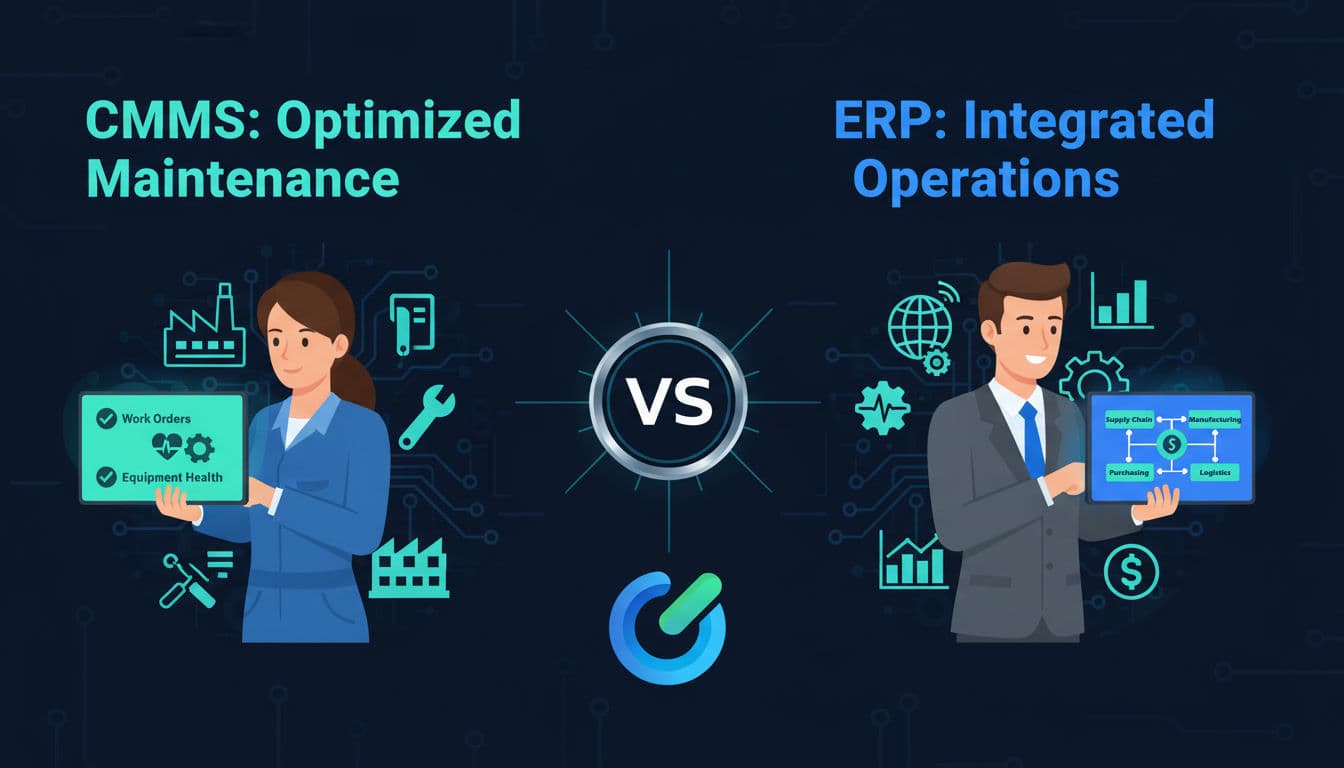

Are you struggling to decide between ERP and CMMS software for your business? You're not alone. Many organizations face confusion when choosing between Enterprise Resource Planning systems and Computerized Maintenance Management Systems, often wondering if they need one, both, or neither. The truth is, ERP and CMMS serve fundamentally different purposes, yet both can be critical to operational success. While ERP manages your entire business ecosystem, CMMS laser-focuses on maintenance operations. Understanding these differences will help you make an informed decision that drives efficiency, reduces costs, and positions your organization for sustainable growth in 2026 and beyond. In this comprehensive guide, you'll learn exactly what sets ERP and CMMS apart, when to use each system, their unique benefits, and how leading organizations integrate both for maximum operational excellence.
What is ERP Software?
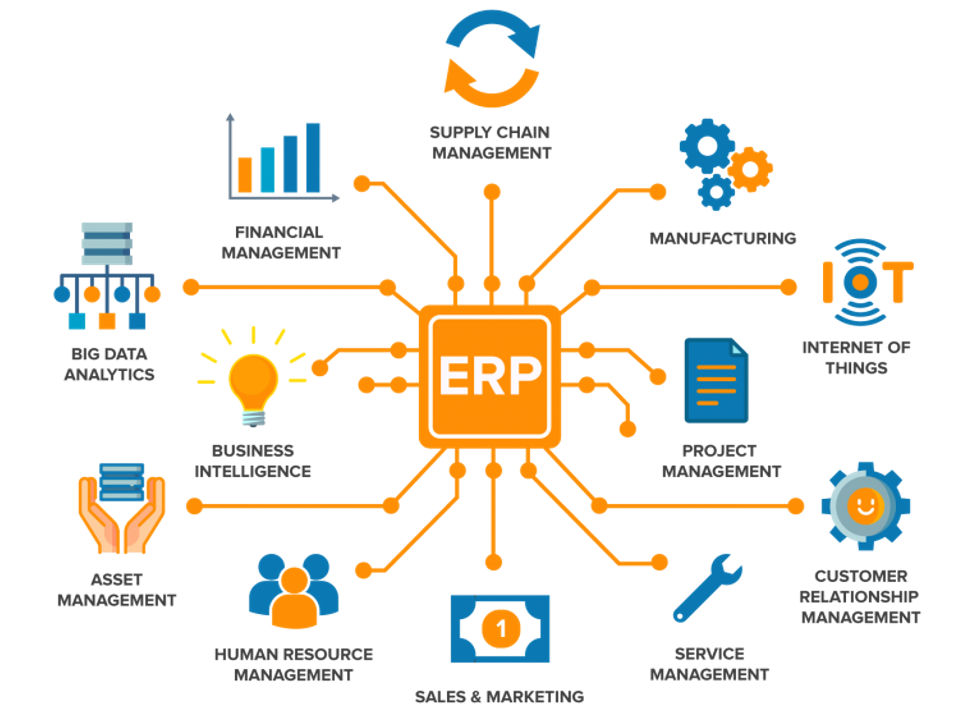
Enterprise Resource Planning software is a comprehensive business management platform that integrates and manages core organizational processes across multiple departments. Think of ERP as the central nervous system of your business, connecting finance, human resources, supply chain, procurement, inventory, manufacturing, and customer relationship management into one unified ecosystem.
How ERP Systems Work
ERP systems centralize data from across your organization into a single database, eliminating information silos and providing real-time visibility into all business operations. Instead of maintaining separate software for accounting, inventory management, HR, and sales, ERP consolidates everything into one interconnected platform.
Modern ERP solutions in 2026 leverage cloud computing, artificial intelligence, and machine learning to deliver:
Real-time data processing across all departments
Automated workflows that reduce manual tasks and human error
Predictive analytics for informed decision-making
Scalable architecture that grows with your business
Mobile accessibility for remote workforce support
Core ERP Modules and Features
Enterprise resource planning platforms typically include these essential modules:
Financial Management: Automated invoicing, accounts payable and receivable, general ledger, cash flow tracking, tax compliance, and real-time financial reporting.
Supply Chain Management: Procurement automation, vendor management, order processing, logistics coordination, and demand forecasting.
Human Resources: Employee records, payroll processing, benefits administration, time tracking, talent management, and performance evaluation.
Inventory Control: Stock level monitoring, automated reordering, warehouse management, and multi-location inventory tracking.
Customer Relationship Management: Sales pipeline management, customer data centralization, marketing automation, and service ticket tracking.
Manufacturing: Production planning, bill of materials management, shop floor control, and quality assurance.
What is CMMS Software?
A Computerized Maintenance Management System is specialized software designed exclusively to streamline, track, and optimize maintenance operations for physical assets and equipment. While ERP focuses on the big picture, CMMS zooms in on a specific but critical area: keeping your machinery, vehicles, facilities, and infrastructure running smoothly.
How CMMS Systems Work
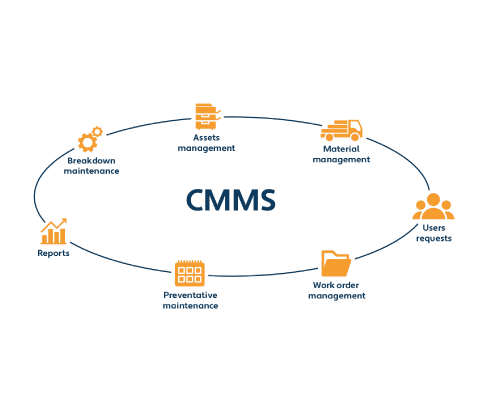
CMMS platforms centralize all maintenance-related information in a single database, enabling maintenance teams to plan, execute, and document every aspect of equipment care. The system tracks asset history, schedules preventive maintenance, manages work orders, controls spare parts inventory, and provides detailed analytics on maintenance performance.
Modern CMMS solutions in 2026 integrate with IoT sensors, mobile devices, and condition monitoring systems to enable:
Predictive maintenance based on real-time equipment data
Automated work order generation triggered by asset conditions
Mobile work order management for technicians in the field
Comprehensive asset lifecycle tracking from acquisition to disposal
Maintenance cost analysis and performance benchmarking
Core CMMS Features and Capabilities
Maintenance management systems typically offer these specialized functions:
Work Order Management: Create, assign, prioritize, and track maintenance tasks from initial request through completion, with automated workflows and real-time status updates.
Preventive Maintenance Scheduling: Calendar-based or usage-based scheduling for routine inspections, servicing, and parts replacement to prevent unexpected breakdowns.
Asset Management: Detailed equipment records including specifications, maintenance history, warranties, downtime tracking, installation dates, and depreciation data.
Inventory Management: MRO (Maintenance, Repair, and Operations) parts tracking, automatic reorder points, vendor management, and cost control for spare parts.
Condition Monitoring Integration: Connection with IoT sensors to track equipment health metrics like temperature, vibration, and pressure for early failure detection.
Reporting and Analytics: KPI dashboards showing metrics like mean time between failures, maintenance costs per asset, technician productivity, and preventive maintenance compliance.
ERP vs CMMS: The Key Differences
Understanding the fundamental distinctions between ERP and CMMS helps clarify which system addresses your specific business challenges.
Scope and Focus
ERP systems provide enterprise-wide functionality across all business departments. They manage finance, HR, sales, procurement, inventory, and maintenance as interconnected modules within a comprehensive platform.
CMMS platforms offer deep, specialized functionality exclusively for maintenance operations. They focus on asset reliability, maintenance workflows, technician productivity, and equipment lifecycle management.
The breadth versus depth distinction is crucial. ERP offers a broad spectrum of capabilities across various departments, while CMMS dives deeper into maintenance-specific data like equipment failure patterns, repair histories, and preventive maintenance schedules.
Data Depth and Specialization
ERP maintenance modules typically provide high-level oversight of maintenance activities. They track maintenance costs, basic work orders, and integration with procurement for parts ordering. However, they lack the granular detail maintenance teams need for complex asset management.
CMMS systems capture comprehensive maintenance data including detailed equipment specifications, failure mode analysis, technician skill requirements, step-by-step repair procedures, photo documentation, and historical maintenance trends. This depth enables sophisticated analysis and continuous improvement.
Customization and Flexibility
ERP platforms can be highly customizable but often require significant configuration effort, technical expertise, and consulting services. Changes to ERP systems typically involve complex workflows affecting multiple departments.
CMMS solutions are generally more user-friendly and easier to tailor to specific maintenance workflows. Teams can quickly modify work order templates, create custom asset hierarchies, and build specialized reports without extensive IT involvement.
Modern CMMS platforms allow organizations to digitally represent their unique maintenance processes rather than forcing operations into rigid, preset structures that don't match real-world workflows.
Integration and Interoperability
ERP systems function as the central hub for all business data, designed to integrate every department and process into one cohesive platform. They serve as the single source of truth for organizational information.
CMMS platforms are built as open systems designed to integrate seamlessly with ERP, Manufacturing Execution Systems (MES), IoT platforms, and other enterprise applications. This integration allows maintenance data to flow into financial systems while enabling CMMS to access procurement and inventory data from ERP.
Cost Structure
ERP implementations typically involve higher upfront costs, longer implementation timelines (often 6-18 months), extensive training requirements, and ongoing support expenses. Total cost of ownership includes licensing, customization, infrastructure, and change management.
CMMS deployments generally cost less, implement faster (often 1-3 months), and require less extensive organizational change. Cloud-based CMMS solutions operate on subscription models with predictable monthly costs and minimal IT infrastructure requirements.
User Base and Accessibility
ERP systems serve users across the entire organization, from executives and department managers to operational staff. The interface and functionality vary significantly based on role and department.
CMMS platforms primarily serve maintenance technicians, maintenance managers, asset managers, and reliability engineers. The interface is optimized for mobile use by frontline workers performing hands-on maintenance tasks.
When to Choose ERP
Organizations should prioritize ERP implementation when they face these challenges:
Enterprise-Wide Process Integration
Your business struggles with disconnected systems where finance, operations, HR, and sales work in silos. Data doesn't flow between departments, creating delays, duplicate entries, and inconsistent information across the organization.
ERP excels when you need unified visibility across all business functions, standardized processes throughout the enterprise, and a single database serving as the authoritative source for all organizational data.
Financial Control and Compliance
You require sophisticated financial management capabilities including multi-currency support, complex cost accounting, detailed audit trails, regulatory compliance reporting, and real-time financial consolidation across multiple entities or locations.
ERP provides robust general ledger functionality, automated financial close processes, comprehensive tax management, and built-in compliance frameworks for regulations like SOX, IFRS, or industry-specific requirements.
Supply Chain Complexity
Your organization manages complex procurement processes, multiple suppliers, intricate logistics, demand planning, and multi-warehouse inventory across various locations or countries.
ERP systems deliver advanced supply chain optimization, vendor performance management, automated procurement workflows, and sophisticated inventory planning algorithms.
Basic Maintenance Needs
Your maintenance requirements are relatively straightforward, focusing primarily on facility management, property maintenance, or simple equipment tracking without complex asset hierarchies or advanced reliability programs.
For organizations with basic maintenance needs, the maintenance module within a comprehensive ERP may suffice, offering the advantage of integrated data sharing with finance and procurement without requiring a separate specialized system.
Organizational Growth and Scalability
You're experiencing rapid growth and need systems that can scale across new locations, additional users, expanded product lines, and increased transaction volumes without performance degradation.
Modern cloud-based ERP platforms provide elastic scalability, supporting business expansion through modular architecture that allows adding functionality as needed.
When to Choose CMMS
Asset-intensive organizations should prioritize CMMS implementation when they encounter these situations:
Complex Maintenance Operations
Your organization manages extensive preventive maintenance programs, multiple asset types with different maintenance requirements, regulatory compliance mandates for equipment servicing, or reliability-centered maintenance strategies.
CMMS excels at handling sophisticated maintenance workflows including failure mode analysis, predictive maintenance programs, condition-based monitoring, and root cause analysis for recurring equipment problems.
Equipment Uptime is Critical
Unplanned downtime directly impacts revenue, customer satisfaction, or safety. Manufacturing plants, healthcare facilities, data centers, transportation companies, and utilities cannot afford unexpected equipment failures.
CMMS reduces unplanned downtime through proactive maintenance scheduling, early failure detection via condition monitoring, optimized spare parts availability, and faster mean time to repair through mobile work order access and detailed repair procedures.
Asset-Intensive Industries
Organizations in manufacturing, facilities management, fleet operations, utilities, oil and gas, mining, hospitality, healthcare, or aviation rely heavily on physical assets for core operations.
These industries benefit from CMMS capabilities like comprehensive asset lifecycle tracking, maintenance cost analysis per equipment unit, warranty management, and detailed equipment history for audits and compliance.
Maintenance Team Productivity
Your maintenance department struggles with paper-based work orders, lost maintenance history, reactive firefighting rather than preventive planning, poor visibility into technician workload, or difficulty tracking maintenance costs.
CMMS improves maintenance team efficiency through automated work order routing, mobile access to equipment data at the point of service, structured digital checklists, and performance analytics showing technician productivity and backlog trends.
Regulatory Compliance Requirements
Industries like food processing, pharmaceuticals, aerospace, nuclear power, and healthcare face stringent regulatory requirements for equipment maintenance, documentation, traceability, and audit trails.
CMMS provides the detailed documentation, automatic reminders for compliance-related maintenance, complete audit trails, and regulatory reporting capabilities required to meet FDA, GMP, FAA, or industry-specific standards.
Comparing Benefits: ERP vs CMMS
Benefits of ERP Software
Unified Business Visibility: Real-time dashboards provide complete operational transparency across all departments, enabling data-driven decision-making and proactive management.
Process Standardization: Consistent workflows and best practices across the organization reduce errors, improve efficiency, and facilitate training for new employees.
Cost Reduction: Automation eliminates redundant manual processes, reduces inventory carrying costs through better planning, and minimizes errors that lead to financial losses. Organizations typically see cost reductions of 15-25% in operational expenses.
Financial Control: Comprehensive financial management provides accurate cost tracking, budget forecasting, cash flow visibility, and regulatory compliance, supporting better financial decision-making.
Scalability: Cloud-based ERP systems grow seamlessly with your business, supporting expansion into new markets, additional locations, and increased transaction volumes without system limitations.
Customer Satisfaction: Integrated sales, inventory, and logistics ensure reliable order fulfillment, faster response times, and consistent customer experiences that build loyalty.
Data-Driven Insights: Advanced analytics and AI-powered reporting transform raw data into actionable intelligence, revealing trends, patterns, and opportunities for improvement.
Benefits of CMMS Software
Reduced Downtime: Preventive maintenance scheduling and predictive analytics decrease unplanned equipment failures by up to 20%, maximizing asset availability and production capacity.
Extended Asset Lifespan: Proper maintenance extends equipment life by 10-15%, delaying capital expenditures and improving return on asset investments.
Lower Maintenance Costs: Optimized spare parts inventory, preventive rather than reactive repairs, and improved technician productivity reduce overall maintenance spending by approximately 18%.
Improved Safety: Regular equipment inspections, safety checklist enforcement, and documented maintenance procedures create safer work environments and reduce workplace incidents.
Regulatory Compliance: Automated compliance tracking, complete audit trails, and documented maintenance history ensure adherence to industry regulations and simplify inspections.
Enhanced Productivity: Mobile work order access, automated scheduling, and structured workflows increase maintenance team efficiency by up to 28%.
Better Resource Allocation: Visibility into maintenance backlogs, technician availability, and priority work enables smarter resource deployment and workload balancing.
Data-Driven Maintenance Strategy: Analytics reveal failure patterns, identify high-cost assets, measure preventive maintenance effectiveness, and support continuous improvement initiatives.
Integration Strategy: Using ERP and CMMS Together
The most operationally mature organizations don't choose between ERP and CMMS—they integrate both systems to leverage their complementary strengths.
Why Integration Matters
ERP provides enterprise-wide visibility, financial control, procurement management, and strategic planning capabilities.
CMMS delivers deep maintenance functionality, asset health insights, detailed work order management, and operational excellence at the equipment level.
Integration creates a comprehensive operational management ecosystem where maintenance data informs financial decisions while business systems support maintenance efficiency.
Key Integration Points
Procurement and Inventory: CMMS identifies spare parts needs and generates purchase requisitions automatically flowing to ERP for approval and ordering. ERP inventory data updates CMMS in real-time, ensuring accurate parts availability information for maintenance planning.
Financial Data Flow: Maintenance costs captured in CMMS automatically post to ERP cost centers, providing accurate financial reporting. Work order expenses, labor hours, and parts consumption integrate seamlessly with accounting systems.
Asset Lifecycle Management: Asset master data created in ERP synchronizes with CMMS, ensuring consistent equipment information. Asset acquisition, depreciation, and disposal tracked in ERP updates CMMS maintenance records.
Work Order Coordination: Work orders created in CMMS that require procurement trigger automated workflows in ERP for parts ordering, receiving, and payment processing.
Reporting and Analytics: Combined ERP and CMMS data enables comprehensive analysis comparing maintenance costs against production output, asset performance against financial returns, and operational efficiency across business units.
Real-World Examples and Use Cases
Manufacturing: Integrated Excellence
A large automotive parts manufacturer implemented both ERP and CMMS to manage complex operations across multiple facilities. Their ERP system (SAP S/4HANA) handles financial consolidation, global procurement, sales order management, and production planning.
Their dedicated CMMS (MaintiMizer) manages preventive maintenance for over 500 production machines, tracks detailed equipment history, monitors condition-based maintenance programs, and provides mobile work order access for maintenance technicians.
The integrated approach delivers comprehensive visibility into how maintenance costs affect production profitability, enables automatic spare parts ordering when work orders are created, and provides leadership with complete operational and financial insights.
Results: 23% reduction in unplanned downtime, 18% decrease in maintenance costs, and improved financial reporting accuracy through automated cost center allocation.
Healthcare: Compliance and Reliability
A hospital network uses ERP for patient billing, supply chain management, HR, and financial operations while deploying CMMS specifically for medical equipment maintenance, facilities management, and regulatory compliance tracking.
The CMMS ensures critical life-support equipment receives timely preventive maintenance, maintains complete audit trails for Joint Commission compliance, and tracks biomedical equipment calibration schedules. Integration with ERP enables seamless procurement of medical equipment parts and accurate cost allocation to specific departments.
Results: 100% preventive maintenance compliance for critical equipment, reduced equipment-related patient incidents by 35%, and streamlined Joint Commission audit preparation from weeks to days.
Fleet Management: Optimized Operations
A logistics company with 800+ vehicles deployed CMMS for fleet maintenance while using ERP for operations management, driver payroll, customer billing, and financial reporting.
CMMS tracks vehicle maintenance schedules based on mileage and calendar intervals, manages DOT compliance inspections, and optimizes maintenance scheduling across multiple service centers. Integration with ERP ensures vehicle downtime is visible in dispatch planning and maintenance costs are accurately allocated per vehicle for profitability analysis.
Results: 27% improvement in fleet availability, 15% reduction in maintenance costs through preventive programs, and enhanced compliance with DOT regulations avoiding costly violations.
Common Mistakes to Avoid
Expecting ERP to Replace CMMS
Many organizations assume their ERP maintenance module will provide the same capabilities as a dedicated CMMS. This misconception leads to frustrated maintenance teams, incomplete equipment data, and inability to implement sophisticated preventive maintenance programs.
Reality: ERP maintenance modules offer basic work order tracking and parts consumption but lack the depth required for asset-intensive operations. They typically provide cookie-cutter preventive maintenance templates, limited mobile functionality, and minimal asset health analytics.
Solution: Evaluate your maintenance complexity honestly. If you manage significant equipment assets, require regulatory compliance documentation, or need predictive maintenance capabilities, invest in a dedicated CMMS that integrates with your ERP.
Implementing Systems in Isolation
Purchasing CMMS without considering ERP integration creates information silos where maintenance data doesn't inform financial decisions and procurement processes remain disconnected from maintenance needs.
Impact: Maintenance teams manually enter data into multiple systems, parts ordering involves duplicate work, and leadership lacks visibility into how maintenance costs affect overall profitability.
Solution: Define integration requirements during system selection. Choose platforms with robust APIs, proven integration capabilities, and vendor support for connected implementations.
Choosing Based on Price Alone
Selecting the cheapest software option without evaluating total cost of ownership, implementation complexity, scalability, or vendor support often leads to expensive do-overs when systems fail to meet business needs.
Hidden Costs: Customization requirements for rigid systems, extended implementation timelines due to poor vendor support, ongoing consulting fees to make inadequate software work, and eventual replacement costs when the system can't scale.
Solution: Develop a comprehensive evaluation scorecard including functionality, scalability, integration capabilities, vendor reputation, implementation support, and long-term total cost of ownership. The right system delivers ROI through improved operations, not just initial cost savings.
Neglecting Data Quality
Poor master data quality—inconsistent equipment naming, incomplete asset records, inaccurate inventory counts—undermines both ERP and CMMS effectiveness regardless of how sophisticated the software may be.
Consequences: Unreliable reports, difficulty finding information, duplicate records, and user frustration leading to workarounds that further degrade data quality.
Solution: Establish data governance standards before implementation, clean existing data during migration, build validation rules into systems to prevent bad data entry, and assign data stewards responsible for ongoing quality.
Frequently Asked Questions
Can CMMS replace ERP for small businesses?
No, CMMS cannot replace ERP even for small businesses. While CMMS excels at maintenance management, it lacks essential business functions like accounting, payroll, sales management, and comprehensive financial reporting. Small businesses with significant equipment assets may need both systems or should consider ERP with robust maintenance functionality if maintenance requirements are relatively basic. The decision depends on whether your business is more asset-intensive or transaction-intensive.
How long does it take to implement ERP vs CMMS?
CMMS implementation typically requires 1-3 months for straightforward deployments, though complex implementations with extensive customization may take 4-6 months. ERP implementation timelines range from 6-18 months depending on organizational size, number of modules, customization requirements, and implementation approach. Cloud-based solutions generally implement faster than on-premise systems for both ERP and CMMS due to reduced infrastructure requirements.
What industries benefit most from CMMS?
Industries with heavy equipment dependence benefit most from CMMS including manufacturing (automotive, food processing, pharmaceuticals), facilities management (commercial buildings, hospitals, universities), fleet operations (logistics, construction, public transit), utilities (water, power, gas), oil and gas, mining, hospitality, healthcare, aviation, and property management. Any organization where equipment uptime directly impacts revenue or safety should strongly consider CMMS.
Can ERP and CMMS share the same database?
While technically possible, ERP and CMMS typically maintain separate databases connected through integration rather than sharing a single database. This architecture provides several advantages including specialized data models optimized for each system's purposes, independent performance tuning, easier upgrades without cross-system dependencies, and reduced risk of one system's issues affecting the other. Modern APIs enable real-time data synchronization making separate databases feel seamless to users.
Is cloud-based or on-premise better for ERP and CMMS?
Cloud-based solutions dominate in 2026 for most organizations due to lower upfront costs, faster implementation, automatic updates, superior accessibility for mobile workforces, reduced IT infrastructure burden, and better disaster recovery. On-premise remains relevant for organizations with strict data residency requirements, highly customized implementations, limited internet connectivity, or specific compliance mandates. For most businesses, cloud-based platforms deliver better total cost of ownership and faster time to value.
How much does ERP vs CMMS software cost?
CMMS costs range from 40-150 per user monthly for cloud-based solutions, with enterprise implementations ranging from 50,000 to 200,000 including implementation services. ERP costs vary dramatically based on size and complexity, from 50-200 per user monthly for SMB cloud solutions to multi-million dollar implementations for large enterprises. Consider total cost of ownership including licensing, implementation, training, customization, integration, and ongoing support rather than just subscription fees.
Do I need both ERP and CMMS?
Asset-intensive organizations typically benefit from both systems integrated together. If your business depends heavily on equipment reliability, implements sophisticated preventive maintenance programs, or faces regulatory compliance requirements for equipment servicing, you likely need dedicated CMMS regardless of ERP capabilities. Organizations with basic maintenance needs may find ERP maintenance modules sufficient. Evaluate based on maintenance complexity, asset criticality, and compliance requirements rather than organizational size alone.
What happens if I only implement one system?
Implementing only ERP limits maintenance team effectiveness through generic workflows, limited mobile functionality, and insufficient asset tracking depth. This often results in continued spreadsheet usage, incomplete maintenance history, and difficulty implementing preventive programs. Implementing only CMMS without ERP integration creates financial blind spots, manual procurement processes, and disconnected business systems. The optimal approach integrates both systems leveraging their complementary strengths for comprehensive operational management.
Conclusion
The difference between ERP and CMMS ultimately comes down to scope and specialization. Enterprise Resource Planning systems manage your entire business ecosystem, integrating finance, HR, supply chain, and operations into one comprehensive platform. Computerized Maintenance Management Systems focus exclusively on maximizing equipment reliability, maintenance efficiency, and asset performance.
Neither system is inherently superior—they serve different purposes and address distinct business challenges. Organizations with basic maintenance needs may find ERP maintenance modules sufficient. Asset-intensive operations requiring sophisticated preventive maintenance, regulatory compliance, or advanced reliability programs need dedicated CMMS capabilities.
The most successful organizations in 2026 integrate both systems, creating a powerful operational management ecosystem where maintenance excellence supports business success. CMMS manages the depth and complexity of equipment care while ERP provides enterprise-wide visibility and financial control. Together, they deliver comprehensive insights, streamlined workflows, and data-driven decision-making that drives competitive advantage.
As you evaluate your software needs, focus on solving specific business problems rather than chasing features. Define clear objectives, involve end users throughout the selection process, prioritize integration capabilities, and plan for scalability. The right combination of ERP and CMMS, properly implemented and actively utilized, transforms operations from reactive firefighting to proactive excellence.
Ready to optimize your business operations? Start by honestly assessing your maintenance complexity and organizational integration needs. The investment you make today in the right systems will pay dividends for years through improved efficiency, reduced costs, and sustainable competitive advantage.