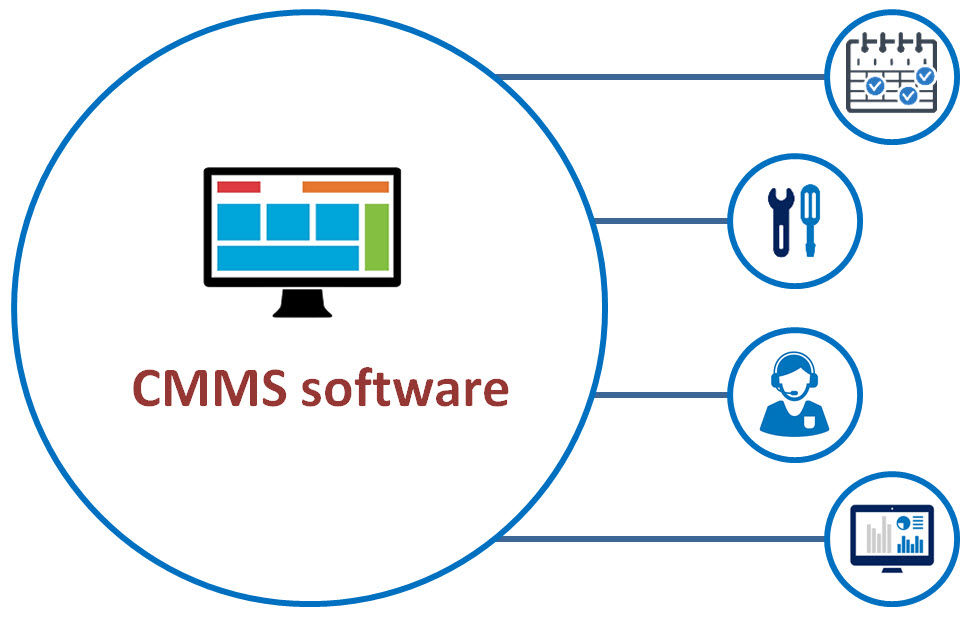

Equipment downtime can cost businesses thousands of dollars per hour. Whether you're managing a manufacturing facility, healthcare institution, or commercial property, keeping your assets running smoothly is critical to your bottom line. That's where CMMS comes in—the digital solution transforming how organizations handle maintenance management.
Key Takeaways
What It Is:
Software that manages all your maintenance operations in one place
Replaces reactive "fix when broken" with proactive scheduled maintenance
Key Benefits:
50% less downtime
15-25% cost reduction
20-40% longer asset life
Automatic compliance documentation
Must-Have Features:
Mobile access for technicians
Automated preventive maintenance
IoT/predictive maintenance integration
Cloud-based and user-friendly
Bottom Line:
ROI in 12-18 months
Essential for any business with equipment to maintain
Transforms maintenance from reactive chaos to strategic advantage
What is CMMS?
CMMS stands for Computerized Maintenance Management System—software designed to centralize maintenance information and streamline maintenance operations. Think of it as the command center for all your maintenance activities, from tracking work orders to managing inventory and scheduling preventive maintenance.
At its core, a CMMS helps maintenance teams move away from reactive, paper-based processes toward a proactive, data-driven approach. Instead of scrambling when equipment breaks down, organizations can plan, execute, and optimize their maintenance strategies with precision.
How Does CMMS Work?
Modern CMMS platforms create a digital ecosystem for maintenance management with five core functions:
Asset Registry - Every piece of equipment gets registered with detailed specifications, maintenance histories, warranty information, and documentation.
Work Order Management - Technicians or automated triggers generate work orders containing all relevant information: asset details, problem description, priority level, assigned technician, and required parts.
Preventive Maintenance Scheduling - The system automatically generates scheduled maintenance tasks based on manufacturer recommendations, usage patterns, or custom parameters.
Inventory Management - Track spare parts inventory, receive automatic alerts when stock runs low, and link parts to specific assets.
Reporting and Analytics - Collect data on every maintenance activity, generating insights into equipment performance, maintenance costs, technician productivity, and asset reliability.
Why Your Business Needs CMMS in 2026
1. Eliminate Reactive Maintenance
Reactive maintenance costs 3-9 times more than preventive maintenance. A CMMS shifts your strategy from firefighting to fire prevention, scheduling maintenance before problems occur.
2. Reduce Downtime by Up to 50%
Manufacturing facilities can lose $260,000 per hour during unplanned downtime. CMMS reduces this through predictive maintenance, faster repairs with instant access to asset histories, and better parts availability.
3. Extend Asset Lifespan by 20-40%
Properly maintained equipment lasts significantly longer. A CMMS ensures every asset receives the care it needs on schedule, delaying costly capital expenditures.
4. Improve Regulatory Compliance
CMMS provides automatic documentation of all maintenance activities, complete audit trails, and compliance reports—everything you need when inspectors come calling.
5. Optimize Resources and Cut Costs by 15-25%
Analytics reveal which assets consume the most resources and where bottlenecks occur. Organizations see cost reductions through reduced overtime, optimized inventory, and energy savings from well-maintained equipment.
6. Make Data-Driven Decisions
CMMS provides concrete data on asset performance and failure patterns. Should you repair or replace that aging equipment? The data will tell you.
7. Prepare for the Future
In 2026, CMMS platforms integrate with IoT sensors, artificial intelligence, and mobile technologies. Sensors detect anomalies early, AI predicts failures, and mobile apps let technicians access information anywhere.
What are some Essential CMMS Features?
When evaluating platforms, prioritize these features:
Mobile Accessibility - Technicians need full functionality from smartphones: creating work orders, accessing asset information, capturing photos, and recording time.
IoT Integration - Modern equipment includes sensors that monitor performance in real-time. Your CMMS should integrate these devices to predict failures and automatically generate work orders.
Preventive Maintenance Automation - The system should automatically generate scheduled tasks based on calendar intervals, meter readings, or usage patterns.
Asset Management - Comprehensive profiles with specifications, manuals, photos, maintenance history, and warranty information. QR codes provide quick asset identification.
Work Order Management - Efficiently create, assign, prioritize, and track work orders with mobile updates and approval workflows.
Cloud-Based Architecture - Cloud solutions offer access from anywhere, automatic updates, lower IT overhead, and easier scaling.
User-Friendly Interface - The most powerful CMMS is useless if your team won't use it. Prioritize intuitive interfaces with minimal learning curves.
What industries benefit from CMMS?
While originally developed for manufacturing, CMMS now serves virtually every industry. Manufacturing facilities reduce downtime and ensure quality control. Healthcare organizations maintain medical equipment and ensure compliance. Property management companies handle HVAC, electrical, and plumbing maintenance. Fleet operations track vehicle maintenance and inspections. Education institutions manage campus facilities. Hospitality venues maintain guest satisfaction. Food and beverage facilities meet health regulations. Energy and utilities companies manage critical infrastructure. If you have equipment or facilities to maintain, CMMS can help.

What are some Implementation Best Practices?
Successful CMMS implementation requires strategic planning:
Start with Clear Goals - Define what success looks like. Are you reducing downtime? Improving compliance? Cutting costs? Clear objectives guide implementation and provide ROI benchmarks.
Build Your Asset Database Gradually - Start with critical equipment whose failure significantly impacts operations. Expand your database as your team becomes comfortable.
Prioritize User Adoption - Include comprehensive training, address user concerns, demonstrate value early, and celebrate wins. If your team doesn't embrace the system, it won't deliver results.
Clean Up Existing Processes First - CMMS amplifies your processes—both good and bad. Review and optimize your maintenance workflows before implementation.
Start with Preventive Maintenance - Once your asset database is established, create preventive maintenance schedules for critical equipment. Quick wins demonstrate value and build momentum.
Monitor and Optimize Continuously - Review system usage regularly. Where do users struggle? What additional training would help? Implementation is ongoing, not a one-time event.
How to measure CMMS ROI?
Track these key metrics to measure success:
Mean Time Between Failures (MTBF) - As preventive maintenance takes effect, equipment runs longer between breakdowns.
Mean Time to Repair (MTTR) - With better information access and planning, repairs become faster.
Planned Maintenance Percentage (PMP) - Target 80% or higher, meaning most maintenance is scheduled rather than reactive.
Overall Equipment Effectiveness (OEE) - Combines availability, performance, and quality for a comprehensive view of productivity.
Maintenance Cost as Percentage of RAV - Industry benchmarks typically range from 2-5% of Replacement Asset Value annually.
Most organizations see positive ROI within 12-18 months through immediate reductions in overtime, emergency repairs, and downtime.
What is the Future of CMMS?
CMMS technology continues evolving rapidly. Artificial Intelligence is moving beyond predictive maintenance into prescriptive maintenance—recommending optimal strategies based on operational context. Augmented Reality assists technicians by overlaying repair instructions onto their field of vision through AR glasses or smartphone cameras. Digital Twins create virtual asset replicas for testing optimization strategies. Advanced Analytics identify patterns across entire fleets. Sustainability Tracking monitors energy consumption and environmental impact as organizations face pressure to reduce carbon footprints.
Getting Started with CMMS
Ready to implement? Follow this roadmap:
Assess Your Current State - Document existing processes and identify pain points
Define Requirements - List must-have features, budget, and user count
Research Solutions - Create a shortlist of 3-5 vendors that match your needs
Request Demos - Test platforms with real use cases from your facility
Check References - Ask vendors for customer references from similar organizations
Calculate Total Cost - Factor in implementation, training, data migration, and support
Plan Implementation - Develop a realistic 3-6 month timeline
Execute with a Phased Approach - Start small, monitor adoption, address issues promptly
Optimize Continuously - Refine processes and expand functionality as your team grows proficient
Conclusion: CMMS as Competitive Advantage
In 2026, CMMS isn't a luxury—it's a necessity for organizations serious about operational excellence. The return on investment is clear: reduced downtime, lower maintenance costs, extended asset life, improved safety, and better compliance.
Organizations that embrace CMMS gain competitive advantages through operational efficiency and reliability that manual systems simply cannot match. Your assets are significant investments—a CMMS ensures you protect and optimize those investments through systematic, data-driven maintenance management.
Ready to transform your maintenance operations? Start by assessing your current challenges, identifying your requirements, and exploring CMMS solutions designed for organizations like yours.
Frequently Asked Questions
How much does CMMS cost? Cloud-based solutions typically range from $40-200 per user per month. Most vendors offer tiered pricing, allowing you to start small and scale up.
How long does implementation take? Implementation typically takes 3-6 months for most organizations, depending on database size and complexity.
Can small businesses benefit from CMMS? Absolutely. Many vendors offer solutions specifically for small businesses with simplified interfaces and lower price points.
Is CMMS difficult to learn? Modern CMMS platforms prioritize user-friendliness. Most technicians learn basic functions within a few days.
Do we need dedicated IT staff? Cloud-based solutions require minimal IT involvement. The vendor handles updates, security, and infrastructure.
What's the typical ROI timeline? Most organizations see positive ROI within 12-18 months through immediate reductions in overtime, emergency repairs, and downtime.
Ready to transform your maintenance operations? Explore how our CMMS and asset management platform helps organizations reduce downtime, cut costs, and optimize asset performance. Schedule a demo today.